
Copaiba Essential Oil
Share
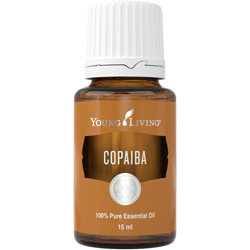
(Copaifera officinalis)
Distilled from gum resin that is wild harvested from Brazilian copaiba, copaiba contains the highest amounts of beta caryophyllene (55 percent) of any known essential oil.
| Item No. | |
| Item | |
| Wholesale | |
| Retail | |
| PV |
Coming Back Soon
These products are only available to purchase by Young Living members. To become a Young Living member click on the "Become a Member" link at the top of this page.
* All prices shown include VAT. Shipping charges not included.
Product Snapshot
Product Snapshot
FEATURES & BENEFITS
- Provides a calming aroma
- Can be diffused to create a warm, inviting environment
- Reduces the appearance of blemishes
- Can be massaged into fatigued areas after activity
- Includes the naturally occurring constituent beta-caryophyllene
- Can be applied to skin to promote the appearance of a youthful, radiant glow
Suggested Uses
Suggested Uses
LABEL DIRECTIONS
Topical: Apply 2–4 drops directly to desired area. Dilution not required, except for the most sensitive skin. Use as needed.
Aromatic: Diffuse up to 1 hour 3 times daily
Aromatic: Diffuse up to 1 hour 3 times daily
CAUTIONS:
Keep out of reach of children. For external use only. Keep away from eyes and mucous membranes. If you are pregnant, nursing, taking medication, or have a medical condition, consult a health professional prior to use.
Ingredients
Ingredients
Ingredients
Copaifera officinalis† (Balsam copaiba) resin†
†100% pure, YLTG™ Essential Oil
Get To Know
Get To Know
PRODUCT BACKGROUND
Copaiba essential oil is the product of distilling the gum resin tapped from the Brazilian Copaifera reticulata tree, native to the Amazon region of the country. The copaiba tree grows between 15–30 meters high and produces tiny white flowers and small nut-like fruit, neither of which are used in the production of the essential oil. Copaiba has been used for various purposes in areas where it grows natively since at least the 16th century. Beyond its use in Young Living essential oil blends, Copaiba is used in many soaps, lotions, and perfumes.
